Living room fireplaces · 2026 buying guide

Choose the fireplace that fits the room you live in.

Room size, venting access, style and budget decide the right fireplace for your living room, not which model looks best in a photo.

Room & Wall Proportions
Sizing guidance for the space you actually have
Venting Access
What your walls, chimney and gas line allow
Side-by-Side Comparison
Gas, electric, wood and water vapour
Cost Ranges
Typical unit and installed figures for the GTA
Start with the room

Look at the layout before you look at models

Before you fall in love with a specific model, look closely at your living room’s layout. An exterior wall or existing chimney opens up gas and wood options; interior walls, condos and apartments usually point to electric or water vapour.

Larger rooms and higher ceilings generally suit linear or built-in formats, while smaller rooms suit compact or wall-mount units. Style and budget narrow things further from there.

Our recommendation: choose the fireplace before framing the wall. Small dimensional differences can change the entire design.

Exterior WallOpens up direct-vent gas and, with a flue, wood-burning options.
Interior WallUsually points to electric or water vapour. No venting required.
Ceiling HeightTaller rooms carry linear and built-in formats better than compact units.
Viewing DistanceSeating position decides fireplace height and viewing-area size.
Four fuel choices

Fireplace types at a glance

Each technology solves a different constraint. Start with what your room allows, then compare flame in person.

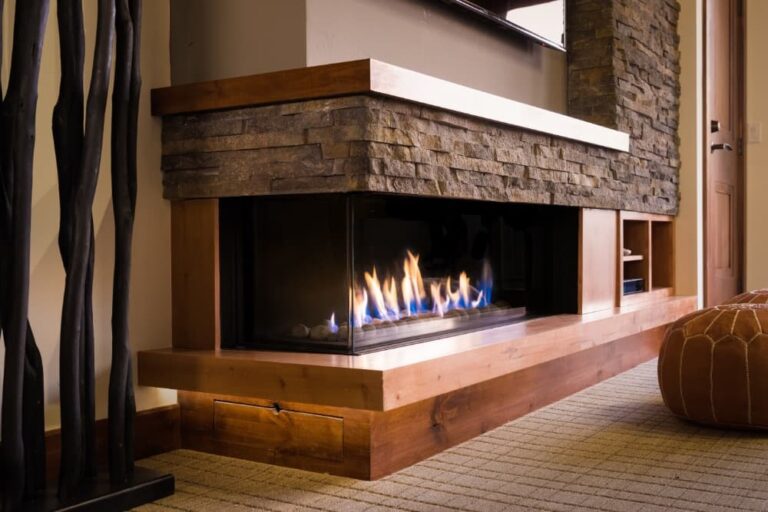
Gas fireplace in a living room

Gas

Real combustion flame, thermostat control, direct-vent or ventless where permitted.
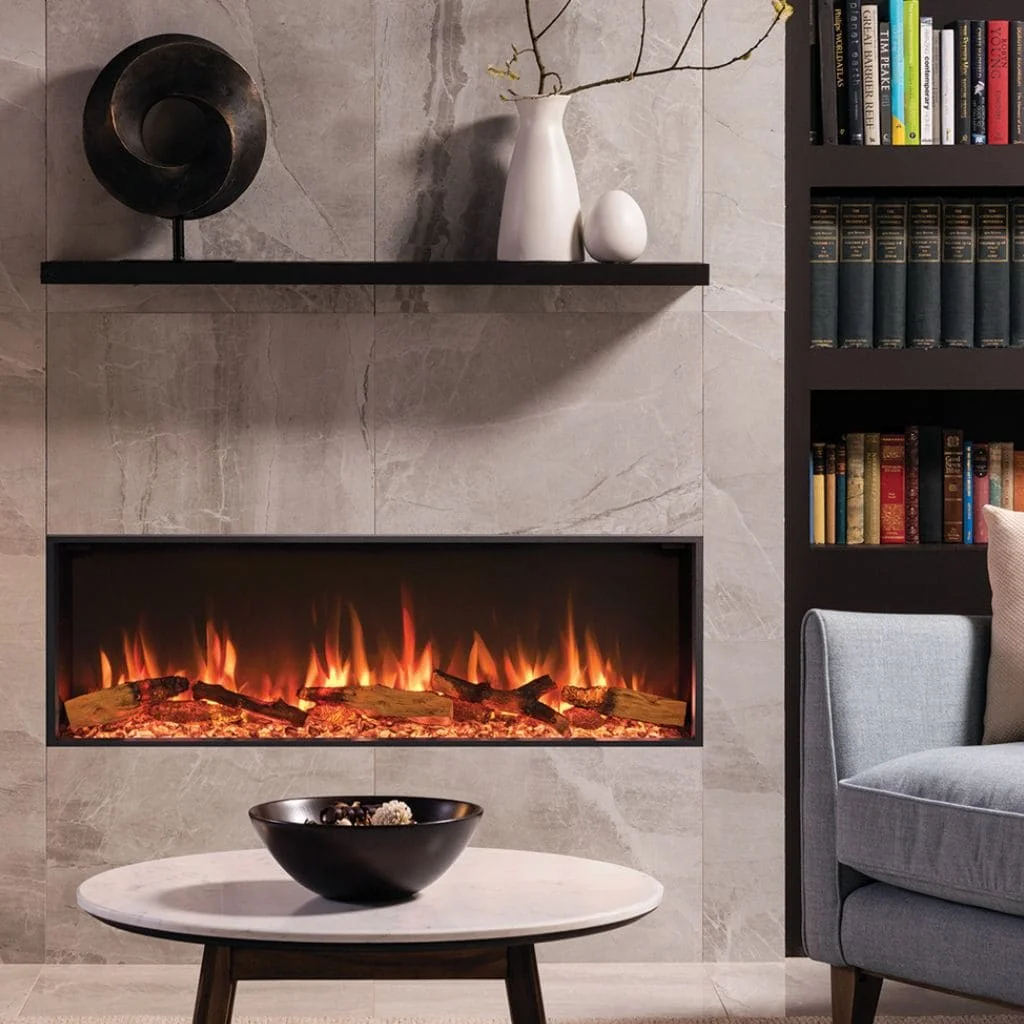
Built-in linear electric fireplace

Electric

No venting or gas line required. Flame-only mode available on most models.
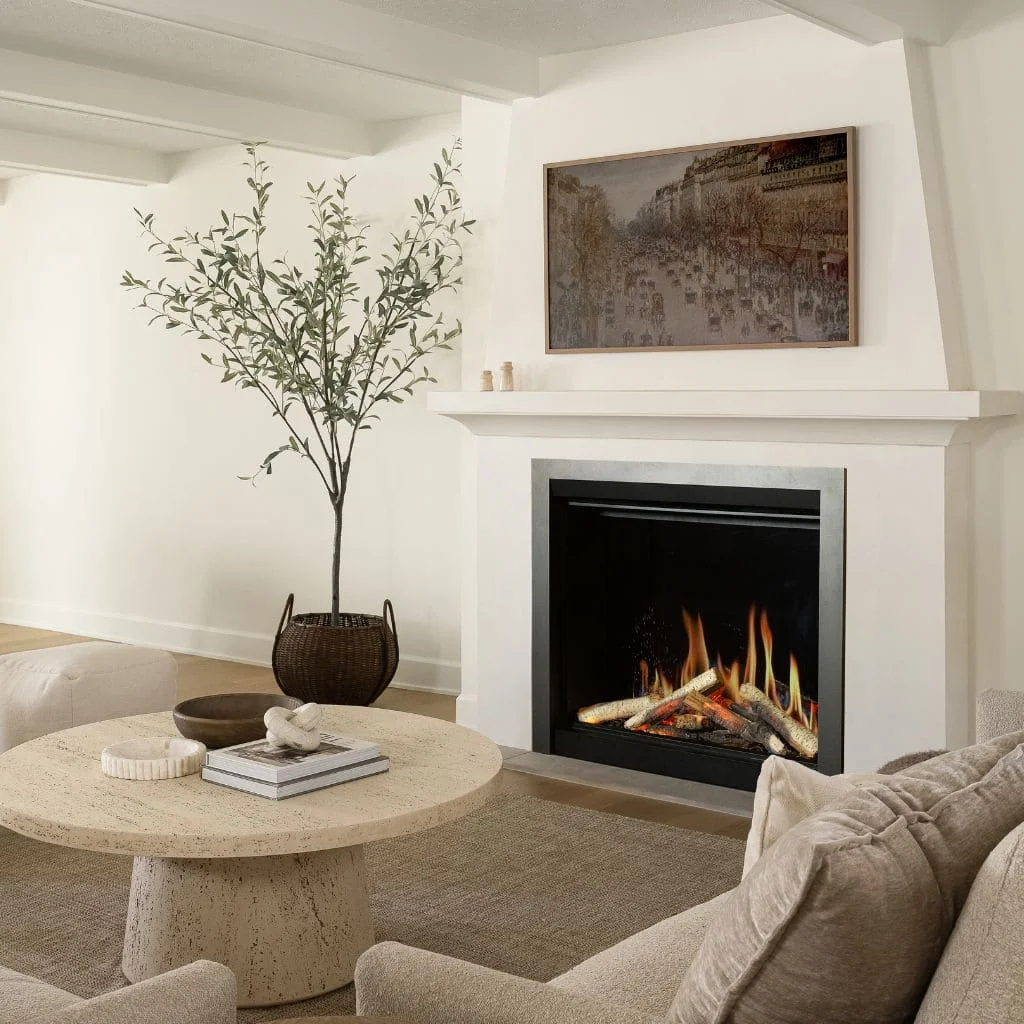
Traditional fireplace with a mantel

Wood

Real wood-burning flame and scent. Requires a masonry chimney or class-A metal flue.
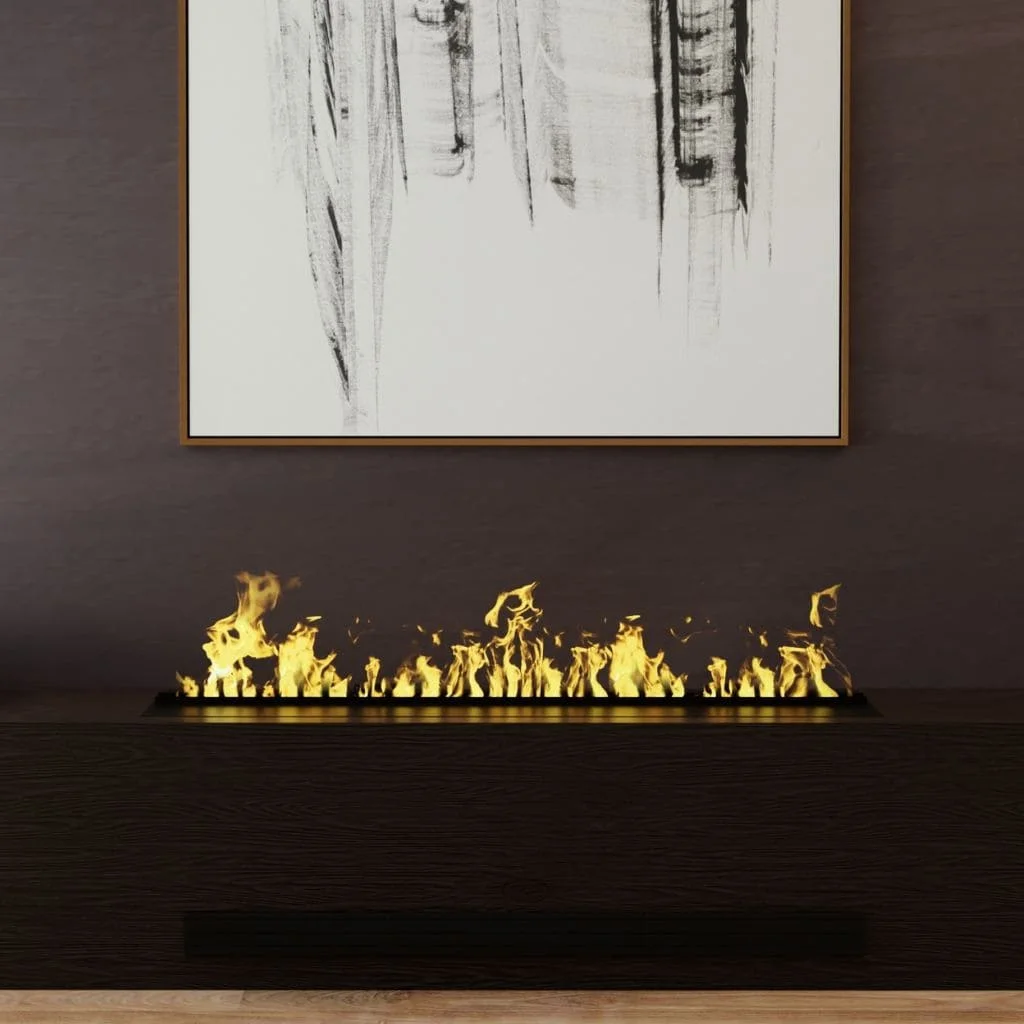
Water vapour fireplace

Water Vapour

Dimensional flame effect with no venting and no heat output. Cool to the touch.
Know the trade-offs

What each option does well

GasStronger, thermostat-controlled heat and a real flame, but it requires a licensed technician and, usually, venting.
ElectricInstalls almost anywhere, often without a permit, and can run flame-only through the warmer months.
WoodThe most infrastructure (chimney or class-A flue) and the only option with real combustion, crackle and scent.
Water Vapour & Bio-EthanolRealism without venting, at the cost of little or no usable heat.
Heating ExpectationsMost fireplaces of any type are built for supplemental or zone heat, not to replace a central heating system.
Flame RealismVaries significantly by technology and model. Seeing live displays is the most reliable way to compare.
Side by side

Gas vs. electric vs. wood vs. water vapour

ConsiderationGasElectricWoodWater Vapour
VentingUsually requiredNot requiredRequired (chimney/flue)Not required
Gas lineRequiredNot requiredNot requiredNot required
Flame operation without heatModel-dependentCommonNot applicableAlways (no heat output)
Heat outputGenerally strongerSupplemental room heatHighNone
Installation complexityUsually higherUsually lowerHighestLow–moderate
Flame realismReal combustion flameVaries by technologyReal combustion flameRealistic effect, not real flame
MaintenancePeriodic service recommendedLowRegular sweeping/ash removalLow
Fast starting point

Sizing your living room fireplace

Choose based on wall proportions, viewing distance and furniture layout, not room square footage alone.

Important: this is a rough planning range, not a heat-loss calculation. Bring your dimensions and a photo to the showroom and we’ll refine it.

20–35 BTUper square foot for supplemental zone heating in a well-insulated room

40–50 BTUper square foot for older homes, higher ceilings or colder rooms
Plan the wall properly

Installation process

A good result starts before framing and finishing.

01

Choose the fireplace type

Confirm venting access, gas line availability and electrical capacity for your room.
02

Confirm the exact model

Dimensions, viewing area, trim, and heat-discharge or venting location.
03

Design the wall

Coordinate fireplace height, surround materials, and, if applicable, TV placement and service access.
04

Install and finish

Licensed gas and electrical work as required, then surround and finishing installation.
Budget planning

Typical cost ranges

General ranges only. Contact us for a quote based on your specific room and venting situation.

TypeTypical unit costInstalled, all-in
Electric$300 – $3,000+Often plug-in; built-ins add framing and electrical cost
Gas (direct-vent)$2,000 – $6,000+$3,000 – $10,000+ depending on venting, gas line and finishing
Wood fireplace/insert$2,000 – $6,000+$2,500 – $9,000+ depending on chimney work
Compare flame in person

Fireplace brands to explore

Availability changes. The showroom is the best place to compare flame appearance, depth and media options side by side.

Realism & variety
Radiant gas fireplaces with a broad range of fronts, liners and traditional or contemporary media.
Architectural
Modern built-in and linear presentations for feature walls and new builds.
Electric realism
Traditional, linear and water-vapour electric technologies for different design goals.
Wood & gas options
Wood and gas models for homeowners who want real combustion heat.
Buying questions answered

Living room fireplace FAQs

Choose based on wall proportions, viewing distance and furniture layout, not room square footage alone. A showroom consultant can refine this using your actual dimensions.
Only if you choose gas or wood. Electric and water-vapour fireplaces do not require venting, though building and electrical rules still apply.
Often yes, but the fireplace’s heat-discharge location, required clearances, wall design and TV manufacturer requirements must be reviewed first.
Gas generally produces stronger heat output. Electric units include a heater intended for supplemental heat, with capacity that varies by model, voltage and room conditions.
Gas installation typically requires a TSSA-licensed technician and may require a municipal permit. Wood-burning installations usually need a WETT-certified inspection. Electric fireplaces generally don’t require a permit.
Yes, if a masonry chimney or certified class-A metal flue is available. It’s a larger project than gas or electric, but many GTA homes are already set up for it.
No. Flame depth, reflection, log detail, media, lighting and viewing angle vary widely by technology and model. Seeing live displays is the most reliable way to compare.
No. Most fireplaces, regardless of type, are designed for ambience and supplemental or zone heat, not whole-home heating.
Electric and water-vapour models are often the most practical, since no gas line or venting is required. Condo-board rules, electrical capacity and installation permissions may still apply.

See it lit before you decide

See every option at the Vaughan Showroom

Photos and spec sheets can’t show you flame realism, sound level or how a finish looks under real light. Compare gas, electric, wood and water-vapour fireplaces side by side, steps from Highway 400/7, serving Toronto, Vaughan and the GTA. By appointment only.

Request Fireplace Details

Fill out the form and  we’ll get back to you with the detailed info in no time.