Compare direct vent, linear, traditional and insert gas fireplaces in one of the GTA’s largest fireplace showrooms, with expert help from selection through installation.
Compare flame technologies in person
No masonry chimney for most installs
Select units run with no household power
TSSA-licensed techs, permitting included
A gas fireplace is more than a nicer view than a wood fire. It is a heat source you can rely on at the push of a button, in almost any room of the house.
The right model depends on more than the size of your wall. Venting type, gas line access, BTU output, and whether you’re retrofitting an existing chimney all shape which fireplace makes sense for your home.
Our recommendation: confirm your venting path before you fall in love with a model. It is the single biggest factor in what is actually possible in your space.

Where gas earns its place over wood and electric, in plain terms.
Sized correctly to your room, a rated unit takes real pressure off the furnace. It does more than add ambience.
Millivolt and battery-backup models light and run with no household power at all.
An insert drops into an existing wood-burning firebox, usually in a single day.
Remote, wall switch or thermostat. Full flame in seconds, with no kindling and no smoke.
Modern units run cooler on the exterior, and most offer a barrier screen that meets current standards.
All the flame, none of the loading, splitting or cleanup between fires.
Every style below is on live display and burning, so you can judge the real flame before you decide.
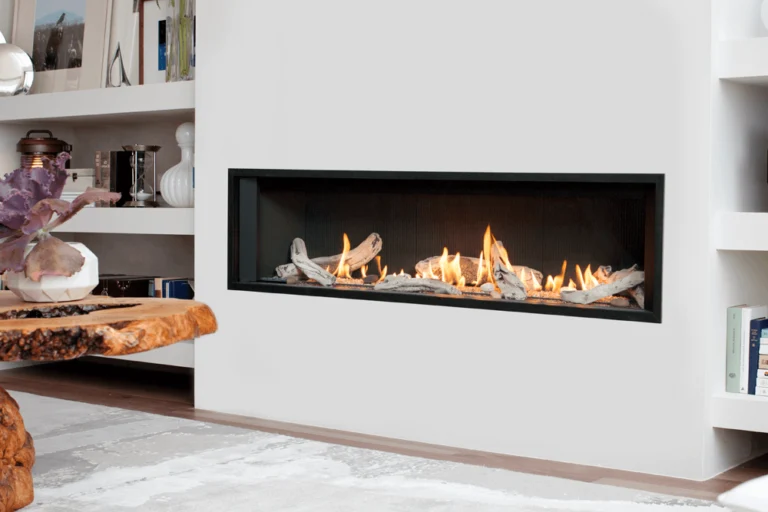
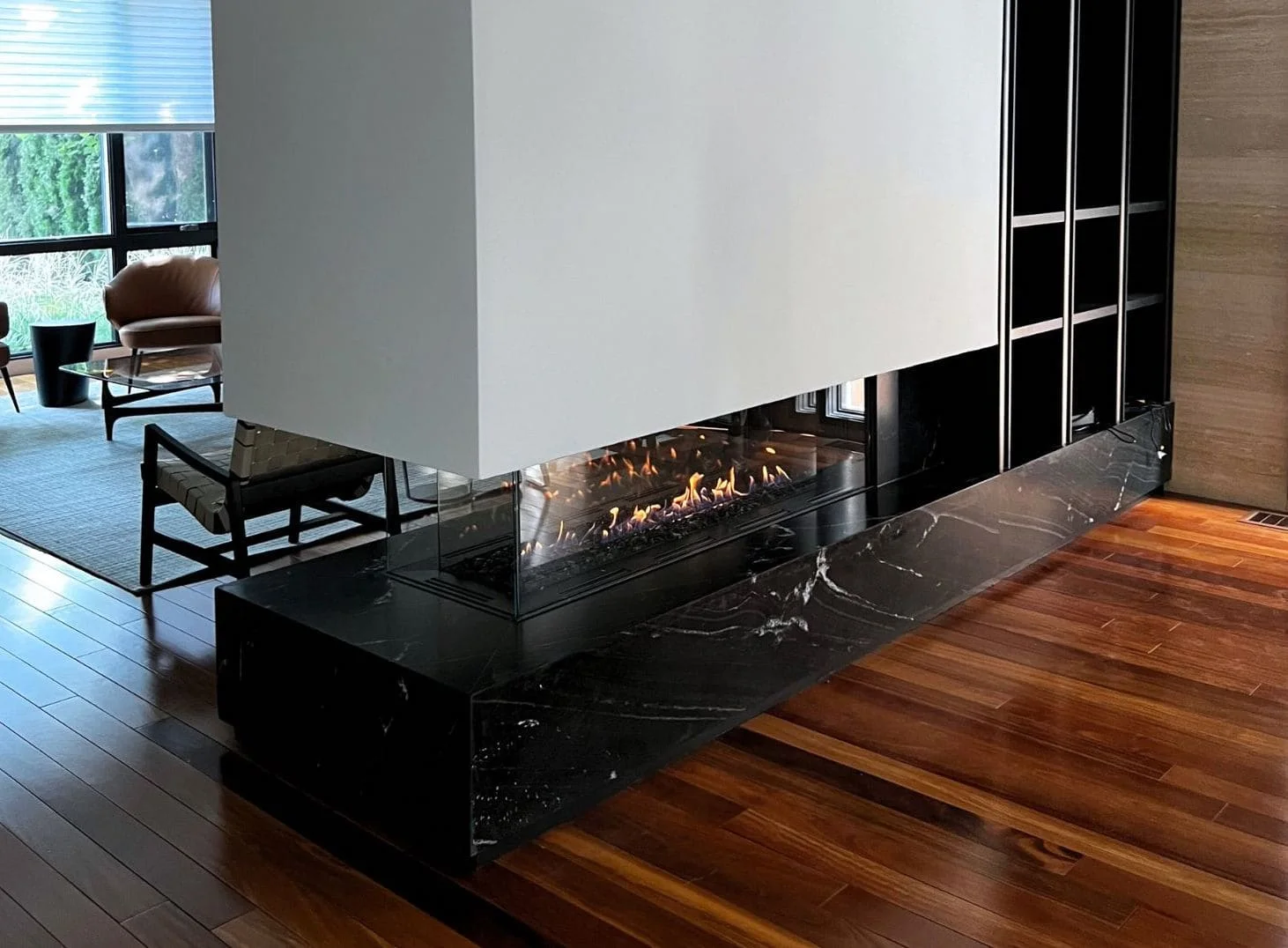
Frameless glass and edge-to-edge flame, built for media walls and modern great rooms.
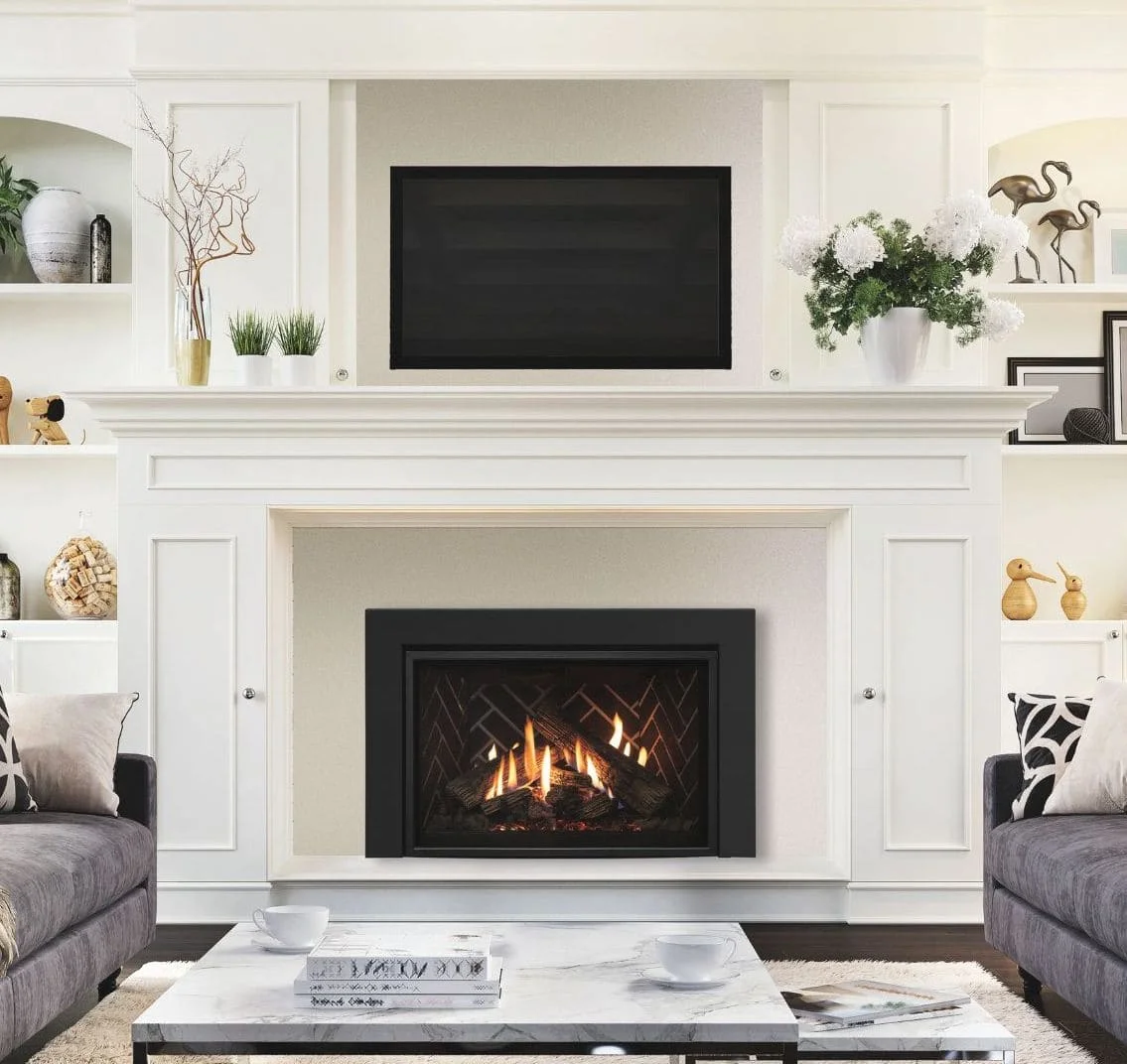
Slides into your existing wood-burning firebox. Same opening, none of the mess.

Classic fronts with realistic log sets, built for a standard mantel wall.
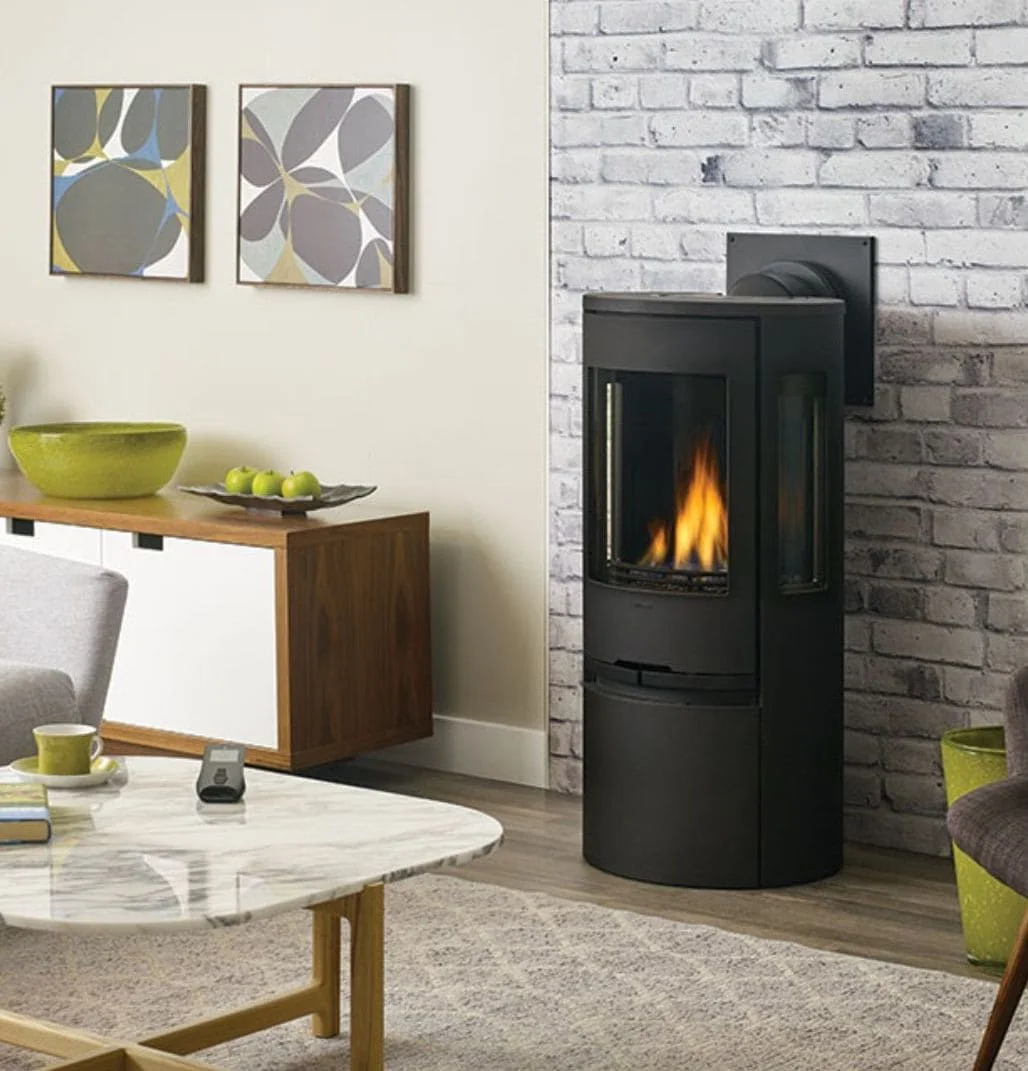
A cast-iron or steel stove look with no wood loading, ideal for cottages and dens.
Venting is the biggest factor in where a gas fireplace can go, and the first thing we assess on a site visit.
Draws air from outside and exhausts outside through a sealed pipe, out a side wall or the roof. It is the most efficient and flexible option, and it works in almost any room.
Uses room air for combustion and exhausts up through a vertical flue to the roof. Common when retrofitting an existing chimney chase.
Releases exhaust into the room instead of venting outside. Restricted or prohibited in many Canadian municipalities. Ask us what is approved for your address.
Important: clearance, framing and venting runs are model-specific. Availability changes as well, so confirm both with our team before framing the wall.
Five steps from showroom visit to final inspection, handled by our own licensed team.
We check your wall, chimney and gas line access.
Direct vent, B-vent or insert, matched to your space.
Natural gas or propane, based on what’s available.
Our TSSA-licensed techs run the gas line and venting.
Final inspection, controls walkthrough, warranty paperwork.
An honest comparison, so you can pick the fuel that fits how you’ll actually use the fireplace.
| Consideration | Gas | Wood | Electric |
|---|---|---|---|
| Venting required | Usually, direct vent or B-vent | Yes, full chimney | No |
| Runs in a power outage | Yes, on select models | Yes, always | No |
| Heat output | Real, adjustable heat | Real, hard to control | Supplemental only |
| Day-to-day effort | Remote or wall switch | Loading and ash cleanup | Remote or wall switch |
| Annual maintenance | One inspection and service | Chimney sweep | Minimal |
| Flame realism | Very high | Highest, it is real fire | Good, screen-based |
| Best for | Reliable heat and ambience, any room | Cottages and purists | Condos, rentals, feature walls |
Choose gas when you want real heat and real flame without the wood. For the full breakdown, read our gas vs. electric vs. wood comparison.
Availability changes. The showroom is the best place to compare flame appearance, heat output and finish options side by side.
Some of the most realistic flame patterns we carry, with strong radiant heat output.
Traditional and linear models that keep the essentials without cutting corners.
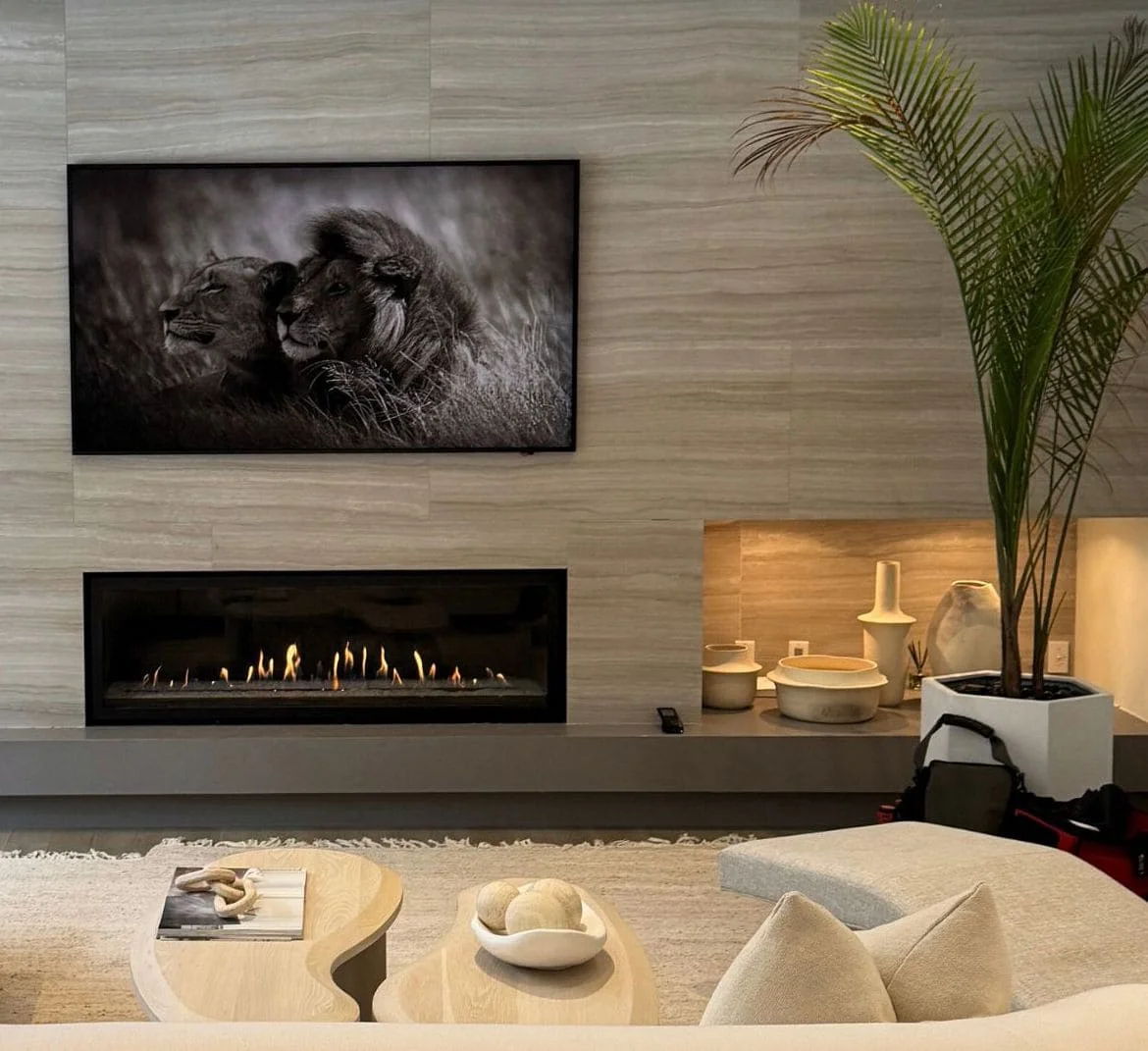
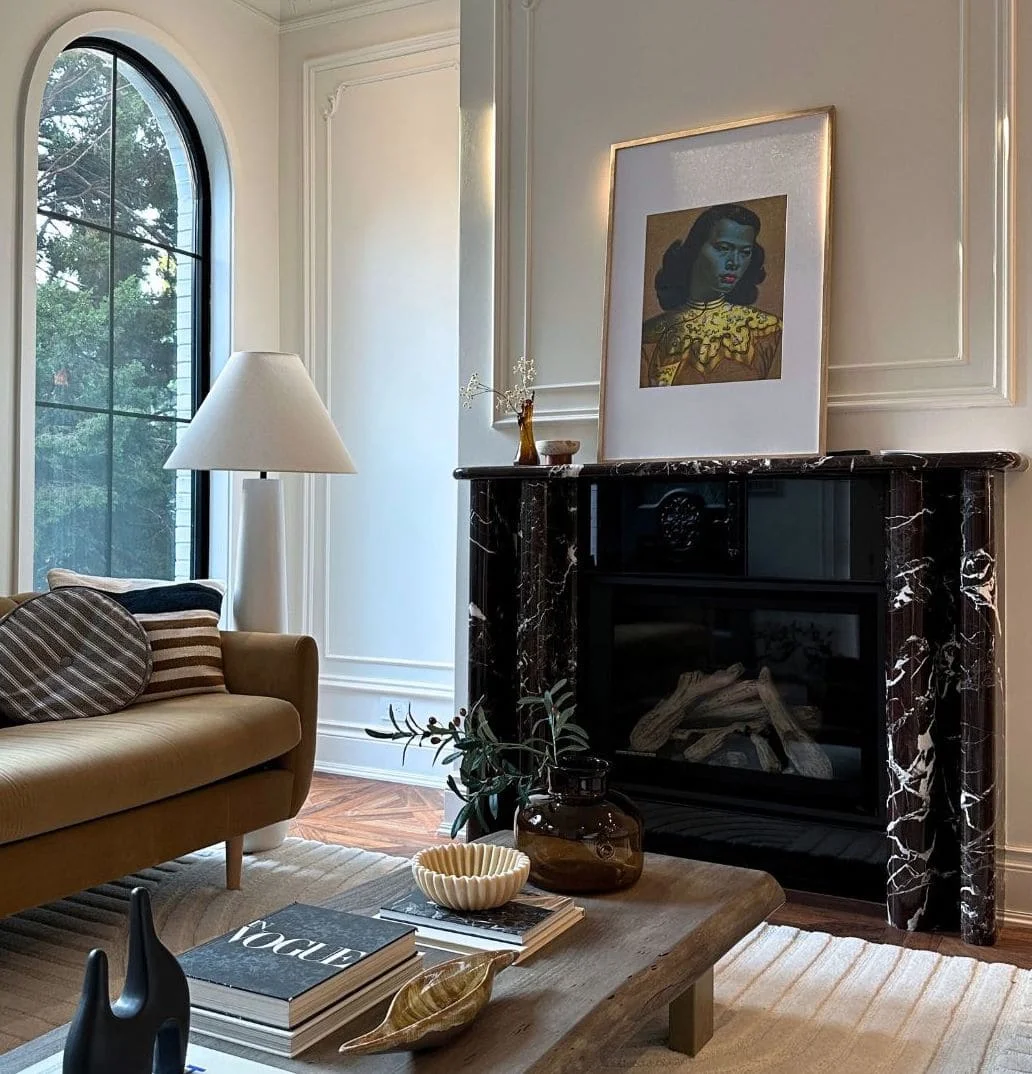
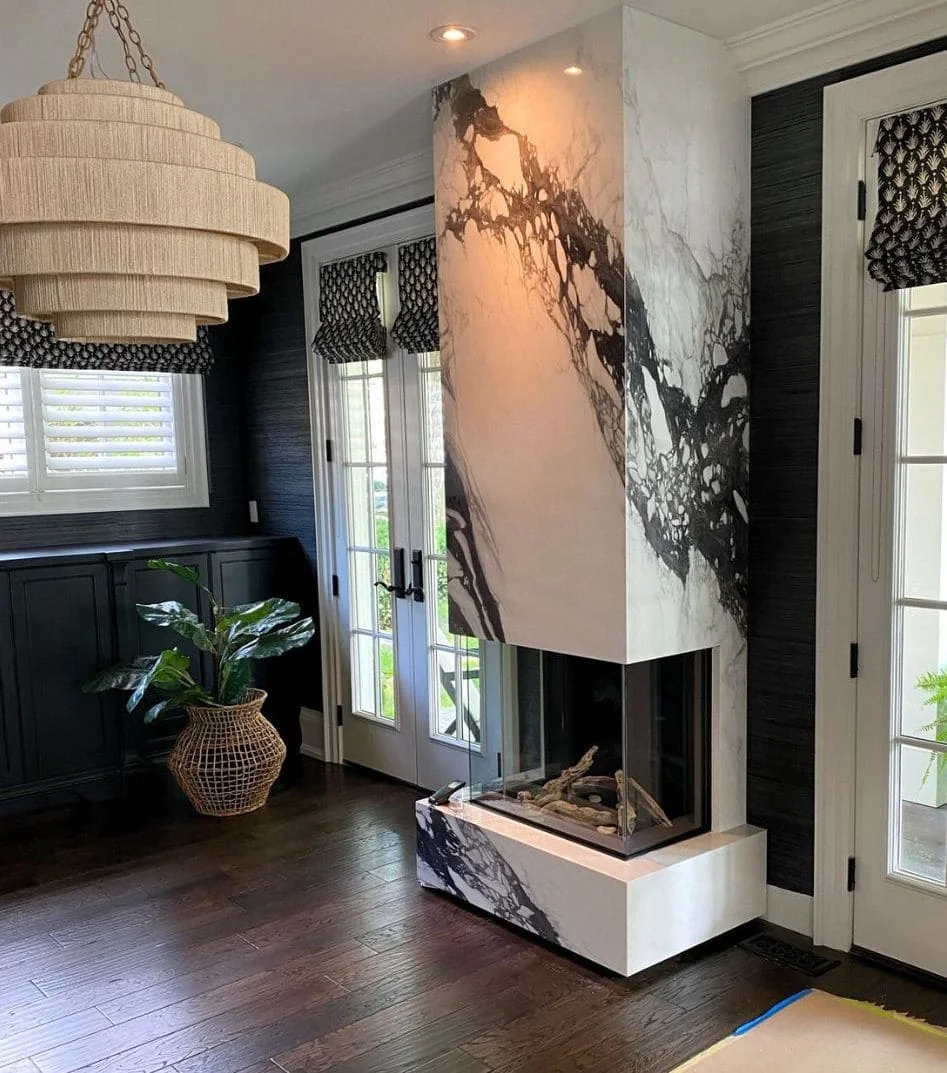
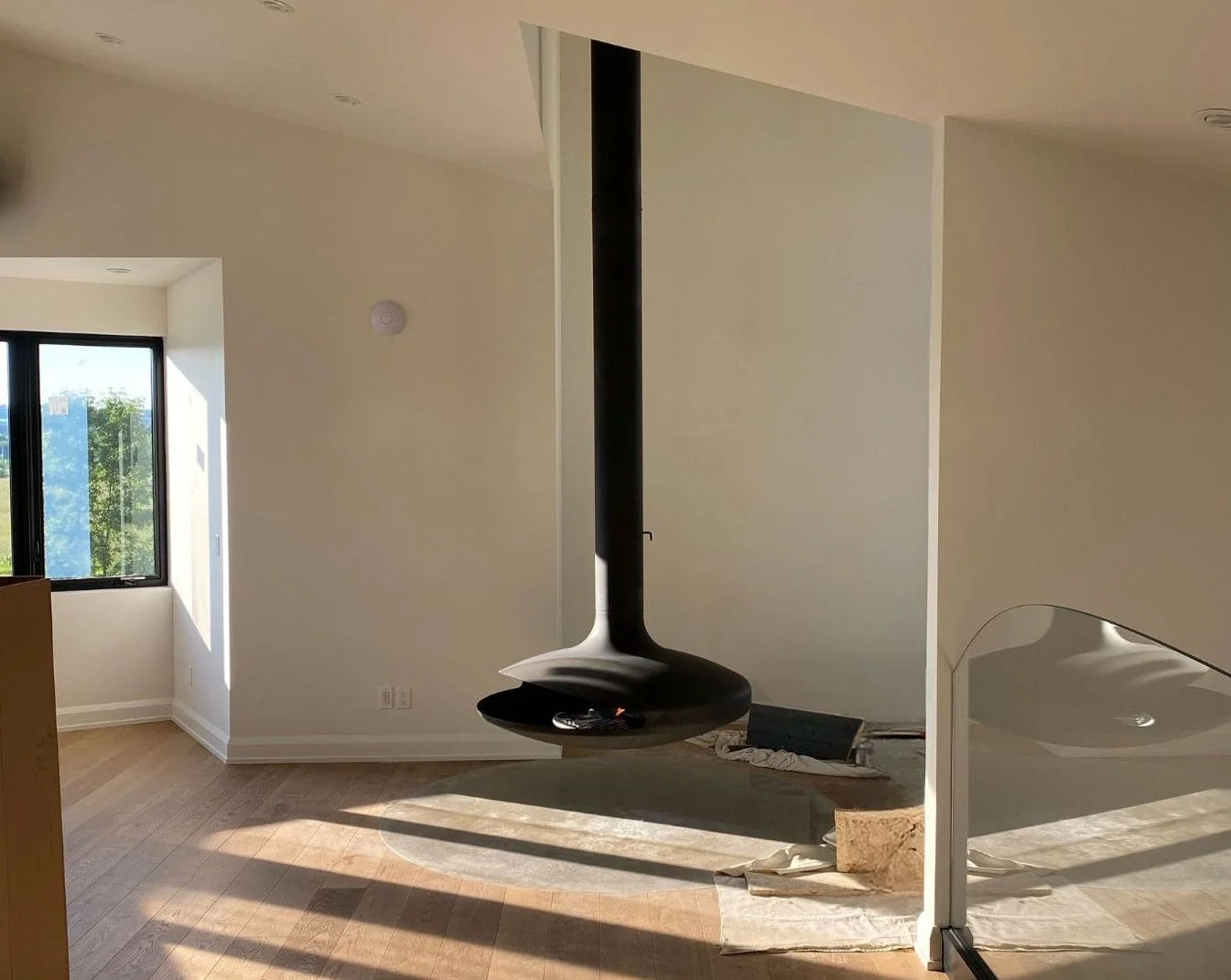
Installations from around the GTA, including linear media walls, insert retrofits and custom stone surrounds.
No. Most gas fireplaces we sell are direct vent units, which draw combustion air from outside and exhaust through a short run of pipe out a side wall or the roof, so no masonry chimney is required. If you already have a wood-burning chimney, we can also install a gas insert directly inside it.
Direct vent units pull in outside air and exhaust outside, making them the most efficient and flexible to install. B-vent units pull combustion air from the room and exhaust up through a vertical flue, so they need a roof penetration. Vent-free units release exhaust into the room and are restricted or prohibited in many Canadian municipalities. We will confirm what is approved for your address.
If your home already has a natural gas line, that is usually the simpler and lower-cost option. If you are in an area without gas service, or want a fireplace in a detached garage or cottage, propane is a straightforward alternative. Most models can be configured for either fuel.
Many of our millivolt and battery-backup models will light and run with no household power at all. Models with electronic ignition or a built-in blower may need power for the fan, though the flame itself can often still operate. Ask us which units offer full outage backup.
It depends on the BTU rating of your unit, your local gas rate, and how many hours a day you run it. Most mid-size units cost roughly $0.20 to $0.45 per hour to run. Our team can walk you through the math for your specific model.
In most cases, yes. A gas insert slides into your existing wood-burning firebox and connects to a new gas line, giving you the same opening with none of the wood, ash or chimney maintenance. We assess your existing chimney and clearances before recommending a specific gas insert.
Yes. Gas fireplace installation in Ontario must be carried out by a licensed gas technician and typically requires a permit and inspection. Our installers are TSSA-licensed and handle the permitting and inspection process as part of every install.
We recommend an annual inspection and maintenance, ideally before the heating season starts. This keeps the burner, ignition system and venting operating safely and efficiently, and is usually required to keep the manufacturer’s warranty valid.
Modern gas units run much cooler on the exterior glass than older models, and most are available with an optional safety screen or barrier that meets current safety standards. We can point out which showroom models are best suited to homes with young children or pets.
Both. A gas fireplace rated for supplemental heating can genuinely take the chill off a room or take pressure off your furnace on cold days. Our staff will match a BTU rating to your room size so you get real heat, not just a nice flame.
Photos don’t show flame realism, heat output or true finish quality. Visit us at Unit 2, 535 Millway Avenue, Concord, by appointment, with 100 live displays on the floor.

Fill out the form and we’ll get back to you with the detailed info in no time.