Choose based on wall proportions, viewing distance and furniture layout, not room square footage alone. A showroom consultant can refine this using your actual dimensions.
Only if you choose gas or wood. Electric and water-vapour fireplaces do not require venting, though building and electrical rules still apply.
Often yes, but the fireplace’s heat-discharge location, required clearances, wall design and TV manufacturer requirements must be reviewed first.
Gas generally produces stronger heat output. Electric units include a heater intended for supplemental heat, with capacity that varies by model, voltage and room conditions.
Gas installation typically requires a TSSA-licensed technician and may require a municipal permit. Wood-burning installations usually need a WETT-certified inspection. Electric fireplaces generally don’t require a permit.
Yes, if a masonry chimney or certified class-A metal flue is available. It’s a larger project than gas or electric, but many GTA homes are already set up for it.
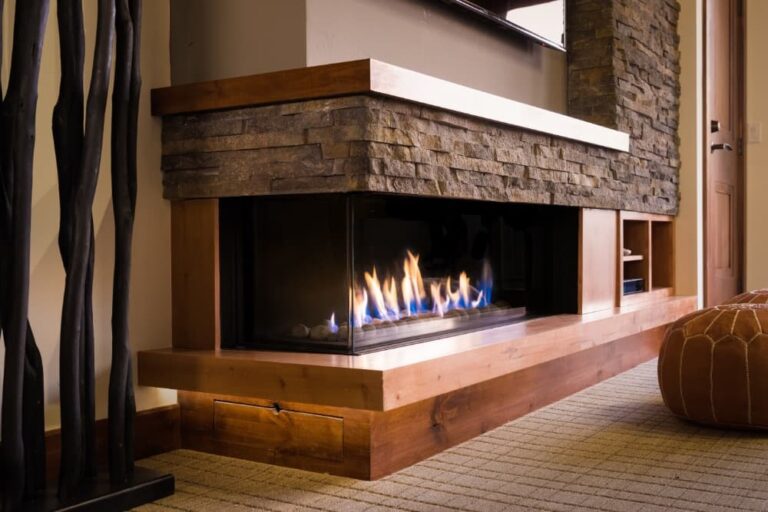
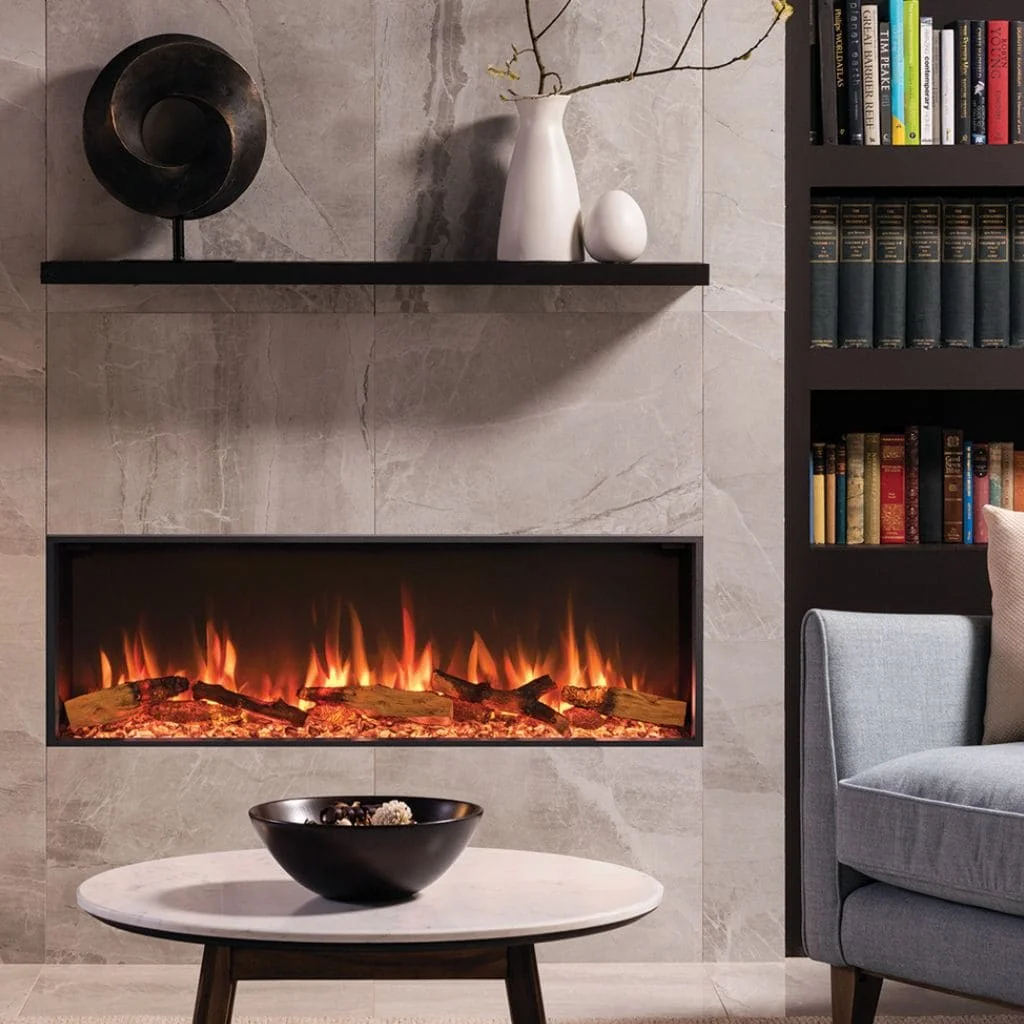
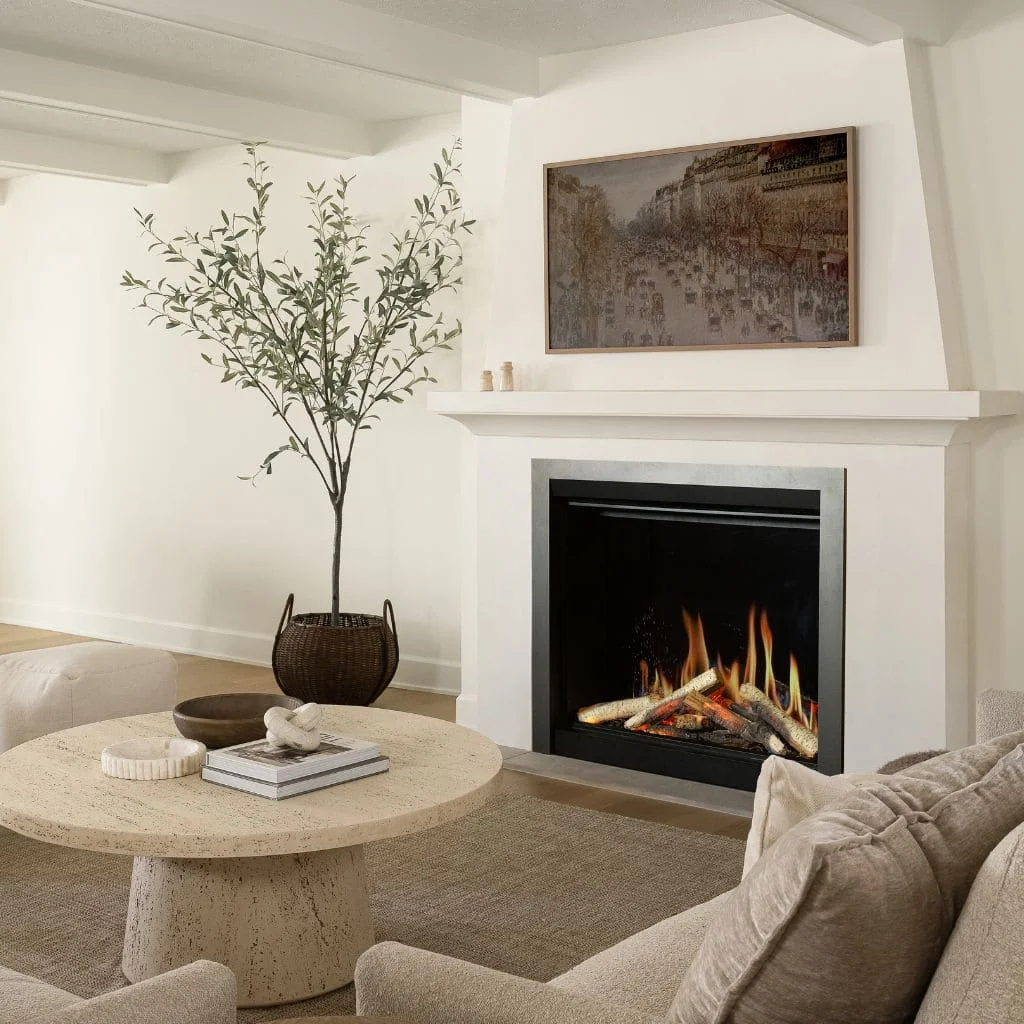
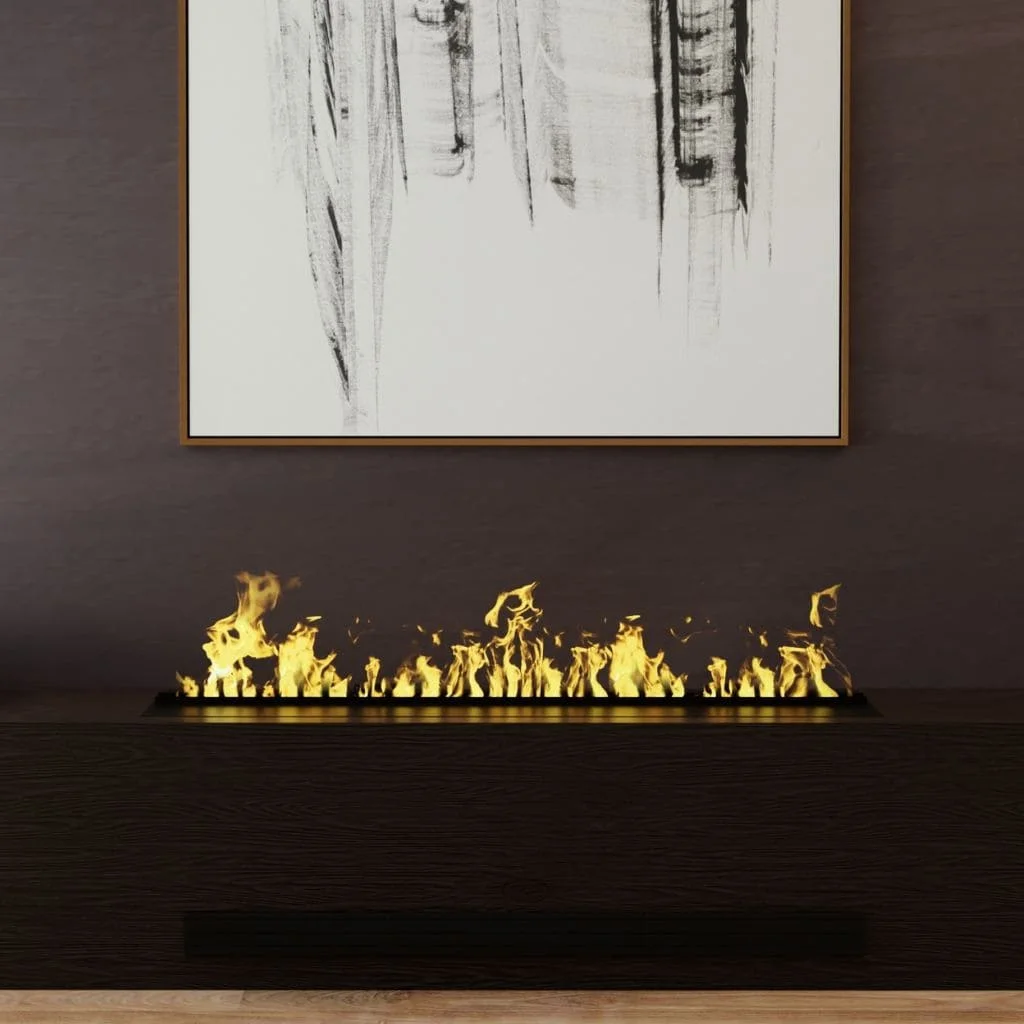
No. Flame depth, reflection, log detail, media, lighting and viewing angle vary widely by technology and model. Seeing live displays is the most reliable way to compare.
No. Most fireplaces, regardless of type, are designed for ambience and supplemental or zone heat, not whole-home heating.
Electric and water-vapour models are often the most practical, since no gas line or venting is required. Condo-board rules, electrical capacity and installation permissions may still apply.